Néhány szó a Delphiről

 Autó, Technika   Néhány szó a Delphiről bejegyzéshez a hozzászólások lehetősége kikapcsolva
febr 092011
 

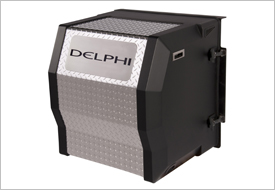
Delphi Automotive Systems

(5725 Delphi Drive
Troy, Michigan 48098-2815
U.S.A. )

Vezető elektronikai és technológia beszállító, 30 országban üzemeltet technikai és szolgáltató központokat, illetve gyártóegységeket.

A céget 1994-ben a General Motors hozta létre Automotive Components Group néven, majd 1995-ben Delphi Automotive Systems-re keresztelték át. Profilbővülés miatt 2002-ben újra átnevezték a céget, ami Delphi Corporation néven folytatta működését. Az elmúlt évtizedben többször jutott csőd közelébe a vállalat, jelenleg a Rothschild Befektetési Bank irányításával zajlik a cég újraszervezése.


Járműipari termékek:

Elektronika:
  • Fedélzeti számítógépek – ECU vagy Body Control Modul
  • Riasztók
  • Indításgátlók
  • Hanggenerátorok elektromos és hibrid járművek számára
 
Műszerfali elemek:
  • Analóg és digitális kijelzők
  • Head-up kijelzők
  • Multifunkciós kormányok
  • Bajuszkapcsolók
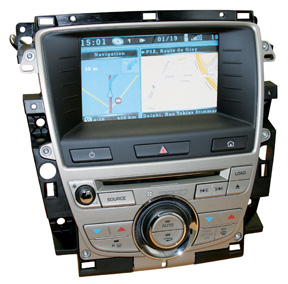
  • Középkonzolok
  • Multimédia interfészek
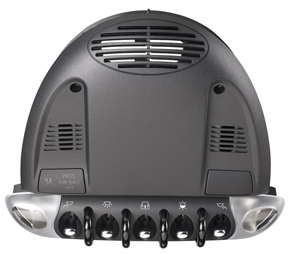
  • Tetőre szerelhető kapcsolótáblák
  • Ülésmozgató kapcsolótáblák


 Elektromos hálózat:
  • Kábelek, csatlakozók
  • Adatátviteli rendszerek
  • Elektronikai központok
  • Gyújtásrendszerek
  • Tervezőszoftver (Delphi Velocity Tool Suite)


Üzemanyagcellák:
  • Solid Oxide Fuel Cell Technology
 
Alkatrészek elektromos és hibrid járművekhez
  • Akkumulátortöltők
  • Akkumulátorcsomagok
  • Szabályozók
  • Nagy feszültségű kábelek
  • Inverterek

Infotainment:

  • Audiorendszerek
  • Navigációs rendszerek
  • Vevőegységek
Erőátviteli rendszerek:
  • Dízelmotor-vezérlő rendszerek
  • Benzinmotor-vezérlő rendszerek
  • Üzemanyagrendszerek
  • Váltóvezérlő rendszerek
Aktív biztonsági berendezések:
  • Sebességrögzítők
  • Ütközésmérséklő rendszerek
  • Radar- és kamerarendszerek
  • Sávelhagyás-ellenőrző rendszerek
  • Parkolóasszisztensek
  • Holttér-figyelő rendszerek
Passzív biztonsági berendezések:
  • Ütközésérzékelő szenzorok
  • Légzsákvezérlő szenzorok
  • Utasérzékelő szenzorok
Szenzorok:
  • Futóműszenzorok
  • Levegőminőség szenzorok
  • Levegőhőmérséklet szenzorok
  • Oxigénszenzorok
  • Sebességszenzorok
  • Nyomásérzékelők
  • Váltószenzorok
  • Turbószenzorok
  • Pozícióérzékelők
Hőgazdálkodás:
  • Klímakompresszorok
  • Légkondicionáló-vezérlő rendszerek
  • Hűtő-, fűtő- és légcserélő rendszerek
  • Erőátvitel-hűtési rendszerek


Az alkatrészgyártás mellett a Delphi szerszámok gyártásával és szerelők képzésével is foglalkozik.

Járműipari beszállítók listája (list of automotive suppliers)

 Autó, Technika   Járműipari beszállítók listája (list of automotive suppliers) bejegyzéshez a hozzászólások lehetősége kikapcsolva
jan 222011
 

3M Corporation

A. Berger, Inc.

A.G. Simpson Automotive

A.J. Rose Manufacturing.C.

ABC Group, Inc.

AC Delco Co.

Accuma Corporation

ACD Tridon, Inc.

ACI Kardam Manufacturing LLC

Acoust-A-Fiber

Acro-Matic Plastics Corporation

Adac Plastics, Inc.

Advanced Cast Products

Advanced Composites Group, Inc.

Advanced Elastomer Systems, L.P.

Aeroquip-Vickers Inc.

Aetna Industries, Inc.

Ahresty

Aichi Steel

Aisin Seiki Co. Ltd.

Aisin World Corp.

Ajusa

AK Steel

Akebono Corporation (NA)

ALCOA

Algoma Steel

Allegro Microsystems, Inc.

Alliance Plastics, Inc.

Allied Signal

Allied Signal Specialty Chemicals

Allied Tube

Alpha Associates, Inc.

Alpine Electronics Inc.

ALPS Automotive Inc.

Altair Engineering, Inc.

Alto Products Corp.

Alttechnologies

ALUMAX Inc.

Alyn Corporation

AMCAST Automotive

American Axle & Manufacturing

American Commercial Industries

American Elements

American LOKRING Corporation

American Precision Casting

Ametek/Dixson

AMP Inc.

Anchor-Harvey Components, Inc.

AOtec Inc.

Apple Rubber Products, Inc.

ARaymond

Arcelormittal Tailored Blanks

Arco Chemicals Co.

AR-Group

Armstrong Industrial Specialties, Inc.

Arrow Safety Device Company

Arvin Industries

Asahi Glass Co.

Asami TEC – motorkerékpár felni

Asbury Graphic Mills, Inc

ASC Inc.

Ashland Chemical

Ashland Inc.

Astechnologies, Inc.

ATA Sensors

Athol Manufacturing Corp.

Auburn Gear, Inc.

Aura Systems, Inc.

Ausimont

Autig

Autoliv, Inc.

Automatic Wireforming & Stamping Specialties

Autosystems Manufacturing, Inc.

Autotronic Controls Corp.

AVM, Inc.

AXON Cable

B & B Motor & Control Corp.

Band It Idex, Inc.

Bando Manufacturing of America, Inc.

Barnant Company

Barry Controls

BASF Corp.

Batten Corporation

Bayer Corp.

Bead Industries, Inc.

Behr – hűtőradiátor

BEI Senrors & Systems Co.

Bekaert

Bekaert Corporation

Bemis Associates, Inc.

Benteler Automobiltechnik GmbH

Berg Chilling Systems

Bergquist Co.

Bertrand Faure NA

Bethlehem Steel Corp.

BF Goodrich Co.

Bilstein Shock Absorbers of America

Blissfield Manufacturing Company

Blue Water Plastics, Inc.

Bokam Engineering, Inc.

Bolder Technologies, Inc.

Borg Indak, Inc.

BorgWarner Automotive

Bos

Bosal

Bourns, Inc.

BPW

BRC Rubber Group, Inc.

Breault Research Organization Inc.

Breed Technologies

Brembo

Bridgestone/Firestone, Inc.

Brigade

Brighton Best Socket Screw Mfg. Inc.

Britax

Brose Fahrzeugteile

Buckbee-Mears

Budd Company, Phillips & Temro Industries

Bundy Corp.

Burger Forming Technology

Burlington Technologies, Inc.

Burr-Brown Corp.

Busak + Shamban

Bussmann Automotive Technologies

C&K Components, Inc.

Cable Manufacturing & Assembly Co., Inc.

Caine Corp.

Calsonic NA

Cambridge Industries

Camcar Textron, Inc.

Camoplast

Canfor USA

Caplugs

Capro

Car Sound Exhaust System, Inc.

Cardell Corporation

Carlisle Engineered Products

Casco Products Corp.

Caterpillar Inc.

CCI

Ceram Tec

Cerex Advanced Fabrics, L.P.

Champlain Cable Corporation

Cherry Corp.

Cherry Electrical Products

Cherry Semiconductor

Chicago Minature Lamp Inc.

Chicago Rawhide

Christiana Industries LLC

CIE Automotive S.A.

Cimos

Clarion Co.

CMI International, Inc.

Code Alarm, Inc.

Compagnie de Saint-Gobain

Continental AG

Continental Tire

Cooper-Standard Automotive

Cummins Engine Company

Cummins Inc.

Dana Corp.

Dayco

Decatur Mold

Delco Electronics Corp.

Delphi Automotive Systems

Denso Corp. (Japan)

Denso Corporation

Detroit Diesel Corp.

Diamondback

DID – lánc

Donnelly Corp.

Dorel France

Dow Automotive

Dow Chemical

Draexlmaier Group

Duerre Tubi Style Group

Dunlop Tech

Dunlop Tire Corp.

DuPont

DuPont Dow Elastomers

Dura Automotive Systems Inc.

Dynacast Inc.

Dytech Group

Eagle-Pitcher Industries

Eastern Alloys

Eaton Corporation

Eberspächer Holding GmbH

Echlin Inc.

Ectron orp.

Elring Klinger

Emitec

Excel Industries

Exedy Corp.

Fabricated Steel Products

Faltec

Faurecia

Federal-Mogul Corp.

Federal-Mogul Corp.

Fel-Pro

Ficosa

Fisher & Company

Flex-N-Gate Corp.

Foamex International

FoMoCo – elektronika, kábel, relé,

Forward Technology Industries

Freescale Semiconductor Inc.

Freudenberg-NOK

F-Tech Inc.

Fujitsu Inc.

Fuju Kiko

Futaba Corp. of America

Fuyao Group – ablak

Gates

Gates Rubber Co.

Gencorp

General Electric

General Seating

General Tire

Gentex Corp.

Georg Fischer Automotive AG

Gestamp

Getrag

Gibbs Die casting

GKN Driveline

GKN PLC UK

Goodyear Tire & Rubber

Gowanda

GRC International

Grede Foundries

Griner Engineering

Grote

Grupo Antolin

Haldex

Harman Intl. Industries Inc.

Hayes Lemmerz Intl. Inc.

Hella KGaA Hueck & Co.

Hewlett-Packard

Hidria

Hitachi America Ltd.

Hitachi Automotive Systems Ltd.

HJS – katalizátor, szűrő

Hoechst Celanese Corp.

Honeywell Inc.

HUF

Hunter Engineering

Hyundai Mobis

Hyundai-WIA Corp.

IAC

IEE

Illinois Tool Works Fluid Products

Imasen Electric Industrial

Inci Holding

Indian Automotive Suppliers

Industrial Control

Inergy Automotive Systems

Inland Steel

Interstate Forging Industries

Iteris Europe

ITT Automotive

Jidosha Buhin Industrial

Johnson Controls, Inc.

JTEKT Corp.

Jtekt Europe

Kaiser Aluminum

Kasai Kogyo

Kautex Textron GmbH

K-D lamp

Keihin Corp.

Kg Knutsson Ab

Kirchhoff Automotive

KKK – feltöltő

Knorr- Bremse

Koito Europe

Koito Manufacturing Ltd.

Kostal

Koyo Corp of USA

KYB Europe

Lamb Technicom

Landi Renzo Spa

Lauren Manufacturing

Lear Corporation – üléskárpit

Len Industries, Inc.

Leoni AG

Leopold Kostal GmbH

LG Chem

Ligon Brothers

Linamar Corp.

Lord Corp.

LTV corp.

LucasVarity Inc. (UK)

Magna International, Inc.

Magneti Marelli S.p.A.

Magtrol inc.

Mahle

Manchester Plastics

Mando Corp.

Mann+Hummel

Mannesmann AG

Mark IV Holding Inc.

Marmon Group

Mascotech Inc.

Maxion Wheels

Mce – 5

Meccanotecnica Umbra

Meiwa Industry

Melexis

Meritor

Michelin Group

Michelin North America

Mikuni Corporation

Mitsuba – elektronika, kürt

Mitsubishi Electric Corp.

Mitsumi

MKS Instruments

Modine Manufacturing Co.

Mondragon

Monsanto co.

Morton International

Motonic Corporation

Motor Service

Motorola Inc.

MS Motor Service International

MSX International

MTS Systems Corp.

Multimatic inc.

Murakami Corporation

Muro Corporation

MW

National Steel

Navistar International

Nemak

New Standard

Newell Rubbermaid France

NGK – gyújtógyertya

NHK Spring Co.

Nichirin – fékcső

Nichiwa – kábel

Nidec Tosok

NIFCO

Nilfisk of America

Nippon Gasket

Nippon Piston Ring

Nippon Seiki

Nishikawa Rubber

Nissin Kogyo Co.

NOK – csapágyak

Northern Tube

NRF B.V.

NSK Ltd.

NTN Corp.

Ogura Clutch

Old Line Plastics

Omron Corp. NA

Osram

Osram Sylvania

Owens-Corning

Panasonic Automotive Systems

Parker Hannifin

Peguform GmbH

Penn Engineering & Manufacturing

Peregrine Corp.

Performance Friction Products

Peterson Manufacturing Co.

Pfeiffer Vacuum Technology

Philips Automotive Lighting

Philips Electronics NV

Pilkington-Libby-Owens-Ford

Pilot Industries

Pioneer Corp.

Pirelli Armstrong

Plastic Omnium

Plastic Omnium Co.

Plastics Technology Laboratories

PPG Industries

PPG Industries Inc.

Quick Cable Corp.

R&B Inc.

Rameder

Raviv Precision

Raymond Group

Reade Advanced Materials

Red Spot Paint & Varnish

Redall

Reflexite

Remy Automotive Europe

Reynolds Metals

Rieter Automotive

Robert Bosch GmbH

Roki – szűrők

Rouge Steel

Royal Philips Electronics

Sachs Automotive

SAIA-Burgess Electronics

Saint Gobain Sekurit – ablak

Sanden Of Europe

Sand-TEP GmbH

Scandinavian Automotive Suppliers links

Schaeffler Group

Schrader Electronics

SCL Sencera Co. Ltd.

Sensata Technologies Holland B.V.

Sensor Development

Sensor Products, Inc.

Sentega

Shiroki Corporation

Showa Corp.

Siemens Automotive

Sinter Metals

SKF Automotive Division

SNT

Sogefi

Solvay Automotive

Sound Specialty Coating Corporation

Sonceboz

SpaceAge Control, Inc.

SPX Corp.

Standard Products

Stanley Electric Co.

Su-Dan Corporation

Sumitaomo Electric Lightware

Sumitomo Electric Industries

Suncall Corporation

Superior Industries

T.Rad

Taiho Kogyo

Takata Corp.

Takata-Petri

Talon Automotive

TDK Corp.

Teleflex Corp.

Tenneco

Texas Instruments

Textron

Thomas & Betts Corp.

Thompson Casting Company

Thyssen Inc. NA

ThyssenKrupp Automotive AG

TI Automotive Ltd.

Tmd Friction Services

Tokai Rika Co. Ltd.

Tokico

Tower Automotive

Toyoda Gosei Co.

Toyota Boshoku Corp.

Toyota Radiator Manufacturing

Toyota-Boshoku Europe

Trad – hűtőradiátor

Tri Star Industries

Trico Industries

TRW, Inc.

TS Tech NA

Tyco Electronics Corp.

Ubd Cleantech

USX Corp.

Valeo SA

Valvoline

Vanguard Group

Vari-Form

VBG Group

VDO

Ventra Group, Inc.

Visteon

Visteon Corporation

VM Motori – erőforrások

Voestalpine Polynrom

Wabco

Webasto AG

Webasto Sunroofs Inc.

Wepredict

Wesbar Corporation

Western Michigan Flocking

Woodbridge Group

Wynn’s Precision

Yachiyo Industry

Yanagawa Seiki

Yazaki Corporation

Yazaki Europe Limited

Yokohama Tire Corp.

Yorozu Corporation

Yutaka Giken

ZF Friedrichshafen AG

ZF Industries

ZVEI


Honlapok:


The assembly line

 Átvett cikk, Autó, Technika, Történelem   The assembly line bejegyzéshez a hozzászólások lehetősége kikapcsolva
júl 091912
 

Forrás: http://fordmotorhistory.com/history/assembly_line.php


The Assembly Line

In 1913, the Ford Motor Company manufactured nearly 200,000 cars, more than half of the automobile production in the U.S. Fred Colvin, author of the American Machinist series, wrote that Ford could produce a Model T every forty seconds because the company’s engineers focused on „principles of power, accuracy, economy, system, continuity, and speed. One element of the famous Ford system was still missing: the assembly line. Ford workers were still completing the final assembly of automobiles by moving in crews from one chassis to the next, each of which sat fixed on a wooden stand. Other workers delivered parts to the assembly stations. The Highland Park plant used the same method for assembling individual components, like engines. In 1913, however. Ford engineers began experimenting with the assembly-line concept, precursors of which existed elsewhere in American industry. For example, Henry Ford is well-known for attributing the germ of the idea to the disassembly process used by Chicago meatpackers. Ford engineers also credited the flour-milling and brewing industries. Additionally, the Westinghouse Airbrake Company had used a conveyor system as early as 1890 to move molds into position to receive poured cast iron and then move them on to the position where they were broken open. Indeed, the first conveyor used in a production process at Highland Park was in the foundry department, which made cast auto parts. In 1913, Ford engineers quickly began installing conveyors and assembly lines in other departments of the plant (radiator, magneto). All were intended to make the process more efficient by keeping the workers stationary while repeatedly performing the same task as the assembly or sub-assembly moved past.

As 1913 unfolded. Ford engineers installed the assembly-line process in the transmission department and the engine department, the latter requiring sub-assembly lines moving toward the main line, much like tributaries flowing into a river. While some conveyors moved the assemblies along, other conveyors constantly moved parts into position so that workers could install the parts without having to fetch them. By the end of the year, Sorensen had begun installing an assembly line for the chassis. This entailed the final assembly, when all the parts, engine, transmission, body and fenders, and lights and final fittings, were installed to create a finished car. This was the line that was the most impressive and therefore came to be understood by the public as „the assembly line.

The assembly line may have been a marvel for journalists and the public to behold, but it was a serious annoyance for production workers. Previously, workers or teams of workers had been paid by the piece and set the pace of their own work, but now a machine (the conveyor) that had the speed set by Ford engineers dictated the pace. Moreover, there previously had been a modicum of variety to each worker’s day as he moved from station to station, installing a variety of parts. Now each worker stood in one place, repeating the same minute task throughout the shift. Such repeated motion was physically taxing, so Ford engineers tried to adjust the heights at which work took place to relieve sore backs and other complaints. Alleviating the physical problems could not remedy another: boredom. The turnover rate among production workers at Highland Park skyrocketed, and word circulated that Ford employees might organize into unions, a possibility that was anathema to Henry Ford. Thus, in January 1914, Ford implemented a huge raise in pay, more than doubling the base rate to $5.00 per day. Such high pay for industrial workers induced many to force themselves to endure the grinding hardships of assembly-line work. The pay-raise was also a public relations coupe for the company, its owner, and the Model T, all three rising to mythical status in early-twentieth-century American culture.

In 1915 Ford was selling a runabout for $390 and distributing $16,200,000 in dividends to its stockholders. Henry Ford, who had provided the original car and exerted a strong influence over company policy sought low prices for his cars and high wages for his employees.

The Model T had a tremendous influence on American life. The process by which Ford produced the car influenced the development of the means of production in other industries. The Model T’s low cost made automobile transportation available to all but the poorest Americans, reducing isolation in rural areas. The popularity of the Model T also stimulated a demand for improved roads. The increase in automobile use was a huge stimulus to the petroleum industry. All those developments, though, eventually moved the nation beyond the Ford Motor Company, and the company had trouble responding to the change. It seems that the Ford system of manufacture was efficient, but not initially flexible. Whereas Ford continued to tinker with the production system to keep cutting costs, the company did not change the car. Other auto companies, most notably Chevrolet, found new ways to compete. Competitors devised improvements in comfort and performance and found ways to add those improvements to cars without having to charge much more than the price of a Ford. In 1927, after nearly twenty years, Ford finally discontinued the Model T and introduced the Model A. Ford had sold 1,112,000 cars in 1926 but only 390,000 in 1927. For those same years, Chevrolet’s sales increased from 475,000 cars to 642,000. Ford’s precipitous drop in production was due to the disruption in production schedules caused by the necessary overhaul of its worldwide manufacturing system to make the new model. Machine tools had to be changed and assembly lines altered. Ford sales eventually recovered, rising to 481,000 in 1928 and 1,310,000 in 1929, but that two-year drought was devastating to Ford dealerships.

Ford’s market recovery came just as the world economy went into the Great Depression. By that time, Ford’s production empire had expanded far beyond Detroit, as his engineers had devised a scheme by which the assembly-line process could embrace geographical space. That scheme was the system of branch assembly plants.


 

Copy Protected by Chetans WP-Copyprotect.